
Most businesses don’t lose Deaf and hard-of-hearing customers in a single, visible moment. They lose them quietly, at various junctions of the visitor journey.
Whether it’s inaccessible marketing, broken checkout flows, or ineffective customer support, the outcome is the same: frustration. And that frustration shows up in the metrics businesses already track. Lower conversions. Weaker sales performance. Higher churn.
The challenge is that the cost of inaccessibility is rarely isolated or measured directly, which means the resulting revenue loss often goes unrecognised. But the financial and ethical impact are both real, and both significant.
The business impact of inaccessibility
When an organisation isn’t accessible, friction is rarely isolated. One Deaf customer might struggle to pay at a service counter without a hearing loop. Another might watch a product video without captions. A third might attempt to reach a support team that relies entirely on automated chatbots.
Over time, that cumulative friction leads to disengagement, abandoned purchases, lower conversion rates, and customers choosing more accessible competitors.
It also reflects a failure at the most basic level of what a business is meant to do: talk to its market. Captions are not just an accessibility tick-box. They decide whether a message lands, and how a brand is read.
This is the business case Direct Access audits work from. Accessibility is often framed as a niche concern for a specific group, but in practice it points to a much broader issue. Friction that one user hits is almost always hitting a wider audience too, and the effect compounds. Revenue leaks. Brand strength erodes.
A dissatisfied Deaf customer is highly likely to share their experience, and the Deaf community is tightly networked. Information about which brands meet access requirements (and which do not) travels fast. A single bad interaction can shape brand perception well beyond one failed sale or one ill-equipped service desk.
The result is not just lost sales at scale. It’s reputational damage that travels across communities and markets.
The true size of the missed market
The scale of the opportunity being missed is significant and well-documented.
In the UK, RNID estimates that around 18 million adults are deaf, have hearing loss, or experience tinnitus. Approximately 87,000 people use British Sign Language as their primary or preferred language, according to the British Deaf Association. An estimated 16 million disabled people in the UK have specific digital accessibility needs, and many non-disabled users also benefit from accessible design.
Office for National Statistics data has consistently shown retail to be one of the sectors where accessibility barriers are most acutely felt, with hearing-impaired and dexterity-impaired customers reporting some of the highest levels of difficulty. Industry research has also found that a significant majority of disabled customers, both with visible and hidden disabilities, would remain loyal to brands that consistently offer robust accessibility provisions.
Taken together, the picture is clear. The Purple Pound, the combined spending power of disabled people and their households in the UK, is estimated at £446 billion. That’s real commercial value, and it’s well-evidenced. Beyond disabled customers, inclusive and usable experiences are preferred by audiences generally.
The United States offers a useful comparison. The Americans with Disabilities Act requires “effective communication,” a legal standard that explicitly covers interpreters, captioning, and accessible customer support. That legal floor, plus the commercial cost of getting it wrong, has driven sustained investment in captioning, video relay services, and Deaf-friendly customer journeys across US business. Return on Disability estimates that the global disposable income of people with disabilities and their families is approximately $13 trillion, with the working-age disabled population alone representing a market larger than China.
Strong Deaf accessibility in a business setting tends to create comfort for everyone. Recruitment routes that don’t rely on phone calls. Environments built around visual wayfinding and clear communication. Staff trained to handle the actual needs of the people in front of them. Hiring practices that recognise disabled people bring perspectives and skills a business might otherwise never reach.
Which raises a fair question. If one of the largest economies in the world has long understood the value, why are so many UK organisations still slow to act on it?
Where Deaf customers face friction
Hearing accessibility is one of the simpler areas to address, especially compared to the structural work involved in mobility provisions. Yet Direct Access auditors keep seeing the same friction points across client environments and digital platforms.
Phone-only verification or support. Many organisations still rely on telephone communication as the primary or only route to identity verification and customer support. For Deaf customers, this creates an immediate barrier, blocking access to services, account recovery, and purchases.
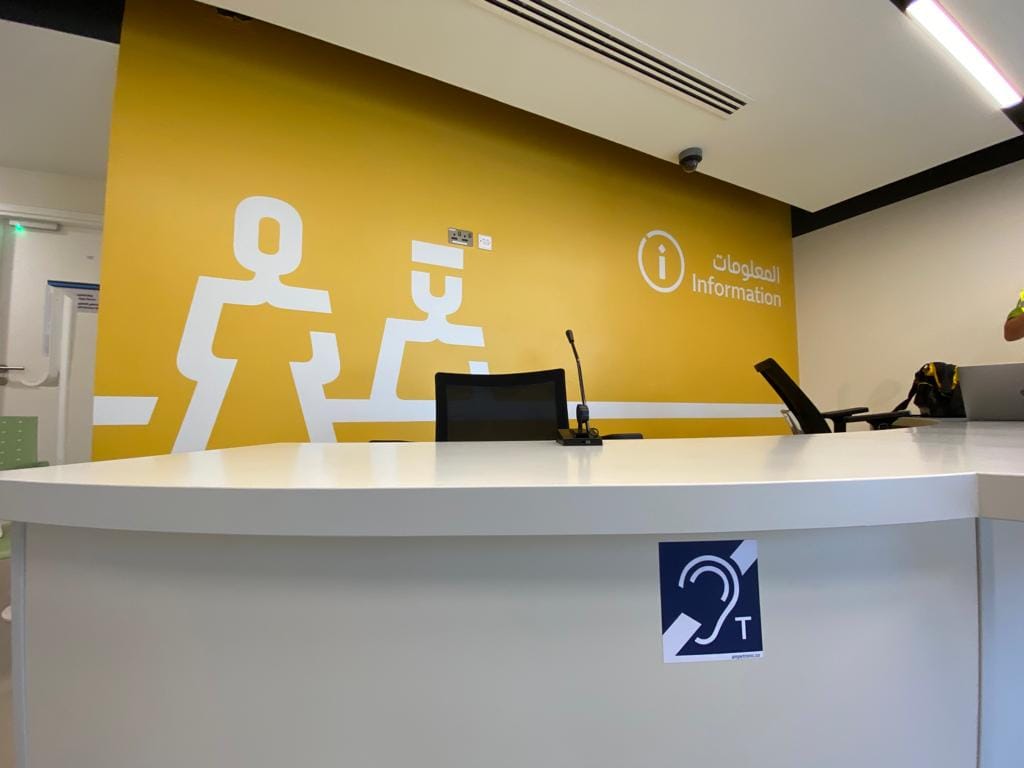
Missing or unmaintained hearing loops. Where loops are absent, switched off, or poorly maintained, Deaf and hard-of-hearing customers are forced to lip-read, guess context, or disengage entirely. This directly impacts conversions at the point of sale.
Videos without captions. Marketing, onboarding, and product videos without captions or transcripts exclude Deaf users from key information at exactly the moments where engagement matters most.
Poorly designed AI chatbots. Chatbots that handle written queries badly, or fail to escalate to accessible human support, create frustrating loops of unresolved problems. The customer who needed help simply leaves.
Untrained frontline staff. Staff without Deaf awareness training often default to verbal communication, look away while speaking (which blocks lip-reading), or rely on rushed written exchanges. The result is misunderstanding, slower service, and exclusion.
Audio-led social media. Social content that depends on spoken audio without captions or written context loses a significant portion of its audience before the message lands. This reduces the effectiveness of marketing spend and weakens brand reach.
No BSL provision. Without BSL interpretation for customer service, events, or key communications, Deaf BSL users cannot access information in their primary language.
Inaccessible safety communication. Audio-only fire alarms, announcements, and emergency instructions create genuine safety risks for Deaf customers and staff, with corresponding legal and reputational exposure for the organisation.
Brands winning through accessibility investment
This is not theoretical. Several major brands have invested in accessibility over the long term, and have publicly linked it to commercial and reputational return.
Tesco has rolled out Quiet Hours across its UK estate and installed hearing loops at scale. A rollout like that doesn’t happen without clear evidence that accessibility reduces friction and lifts customer satisfaction.
In financial services, NatWest’s “Banking My Way” lets customers record their access and communication preferences once, so they get consistent service across branches and channels. It now supports hundreds of thousands of customers. Barclays has offered live BSL interpretation through video relay for several years, and was among the first UK banks to install hearing loops in branch.
The most telling recent example sits outside the UK. In late 2025, Amazon France launched live customer service in French Sign Language, connecting Deaf and hard-of-hearing customers with professional interpreters over video, with plans to extend to full opening hours and add French Cued Speech provision shortly after. This is worth paying attention to. Amazon is not a company famously sentimental about customer experience. They invest where the return is clear and they police cost ruthlessly everywhere else. If LSF provision has cleared that bar, the commercial maths on accessible customer support, fewer abandoned queries, faster resolution, higher retention among an underserved customer base, now works at the scale Amazon operates. If it works there, it works in most UK businesses too.
Investment at this scale, held across multiple sectors and geographies, doesn’t happen without clear commercial return. If anything, it has strengthened these brands’ positions with disabled and non-disabled customers alike.
How Direct Access identifies your friction points
A Direct Access audit looks at your products, services, and environments through the lens of disabled users themselves. Our approach combines lived experience testing with deep theoretical and regulatory expertise, which means our reports go beyond compliance checklists and into practical commercial recommendations.
Our audits identify where and how customers are being lost, and what to change to recover them. That typically includes:
- Disability awareness training designed around frontline service realities
- Hearing loop specification, installation guidance, and maintenance protocols at service counters and information points
- WCAG-aligned captioning standards for video and digital content
- Text-based and human-supported customer service routes
- End-to-end customer journey analysis across physical and digital touchpoints
Most importantly, our audits show where disabled customers are being excluded from spending money with you, and what it will take to bring them back.
If you suspect your organisation is losing Deaf and hard-of-hearing customers without knowing it, that’s exactly the gap an audit is built to surface. Let’s start a conversation about what that looks like for your business.