Every three to five years for a stable estate. Sooner where the building has been altered, the use has changed, or a relevant standard has been updated.

info@directaccess.group
UK: +44 1270 626222
Ireland: +353 (0)15079081
Ireland: +353 (0)15079081
Consultancy > Access Audits | Direct Access
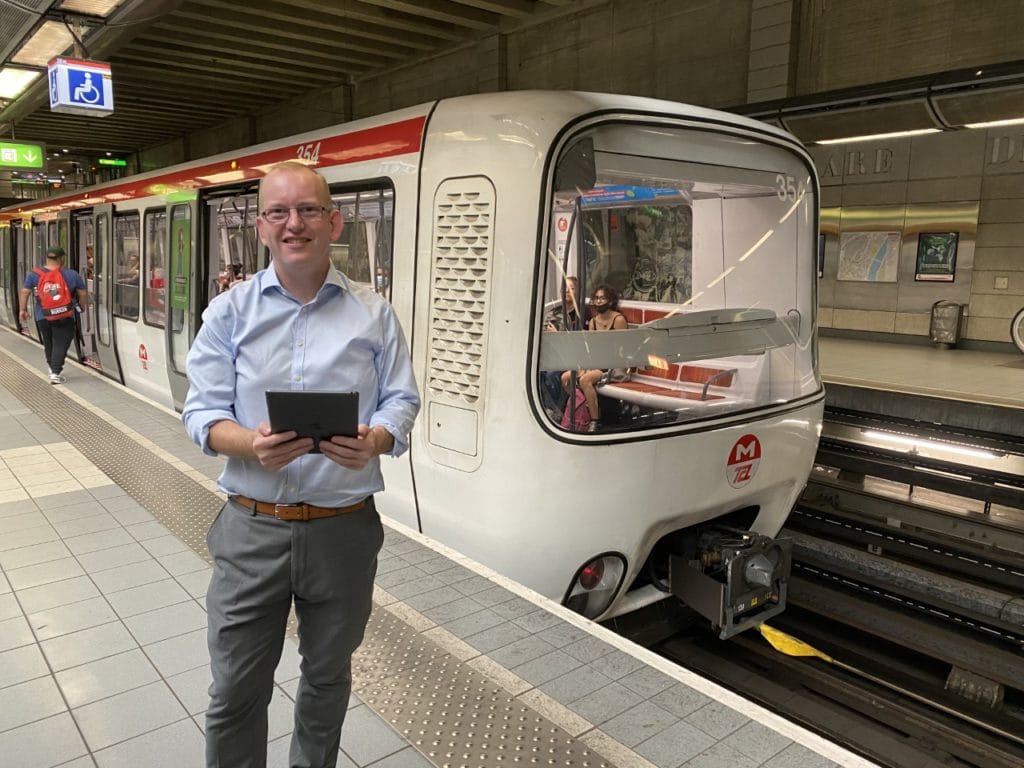
An access audit is a structured assessment of how accessible a building, place, or service is for the people who need to use it. It identifies the barriers people experience, explains why they occur, and prioritises the actions that will make the greatest difference.
Access audits are commissioned by organisations across the public and private sectors, including workplaces, healthcare, education, transport, retail, hospitality, housing, public realm, and heritage environments.
That’s the theory. After delivering thousands of access audits across the UK and internationally, we’ve found that the difference between a useful audit and a wasted one has little to do with the number of findings. It comes down to whether the report changes decisions.
Most access audits assess the physical environment alone. Direct Access assesses physical, sensory, cognitive, digital, and operational accessibility together, because visitors experience them as one journey. A step-free entrance is worth little if the booking system that gets someone there cannot be used.
What makes a good access audit?
Compliance is not prioritisation. A building can satisfy Approved Document M in full and still produce poor visitor journeys, because the regulations set a minimum for construction rather than a test of how a place works in use. Accessible does not always mean intuitive.
The most common failure in access auditing is volume. A report that lists 400 findings without ranking them transfers the analytical work back to the client. It looks thorough and it is functionally useless, because the organisation receiving it still has to work out which twelve of those findings matter, which forty can wait for the next refurbishment, and which are artefacts of a listed façade that will never change. That judgement is the audit. Everything else is data collection.
A good access audit tells an organisation three things: where the friction is across the whole journey, which improvements deliver the most for the least, and how the remainder sequences against refurbishment cycles and capital planning. It gives a building manager something to act on this month, a project team something to design around next year, and a board something to fund.
What an access audit covers
A complete access audit follows the whole user journey rather than inspecting a building in isolation:
Some audits are narrower by design. A communication accessibility audit assesses printed materials, broadcast output, and customer-facing information. A digital accessibility audit assesses websites and applications against WCAG. Most organisations need more than one, and the value comes from assessing them together.

When to commission an access audit
Refurbishment or capital works. Accessibility improvements cost substantially less designed in than retrofitted. An audit at RIBA Stage 1 or 2 sets the brief.
New build or fit-out. Compliance with Approved Document M is a floor. An audit tests the design against how the building will be used.
Complaint or legal exposure. A documented audit demonstrates that an organisation assessed its position and acted on it.
Portfolio review. Multiple sites need comparable data across the estate to prioritise investment sensibly.
Change of use or occupancy. A building that worked for one function may not work for the next.
Periodic review. Standards move, estates age, and operational practice drifts. Most organisations benefit from reassessment every three to five years, sooner where the estate is changing.
There is no statutory requirement to commission an access audit. The Equality Act 2010 places an anticipatory duty on service providers to make reasonable adjustments, and an audit is how most organisations establish what is reasonable and evidence that they considered it.
Who should carry out an access audit?
Access auditing is unregulated. Anyone can offer one, and the quality of what arrives varies more than most buyers expect.
Four things separate a reliable audit from an unreliable one.
An accredited methodology. The methodology determines what gets assessed, how findings are recorded, and how recommendations are ranked. NRAC accreditation is the recognised professional standard in the UK, and the methodology behind an audit should be designed by accredited consultants regardless of who carries out the survey.
Quality assurance. A survey is a snapshot taken by one person on one day. QA is what turns it into a consistent output, particularly across a portfolio where findings need to be comparable between sites.
Accessibility problems rarely exist within one discipline. They exist where disciplines meet. The barriers that cause most difficulty sit at the joins: between the physical environment and the operational procedure, between the wayfinding and the app, between the accessible toilet and the booking process. Single-discipline providers produce reports that are correct within their scope and blind outside it, which is why the problems that generate the most complaints are so often the ones nobody audited.
Lived experience, applied properly. Lived experience of disability sharpens judgement about what actually causes difficulty and what is a paper deviation. It works as an input to a structured methodology. It does not work as a replacement for one, and an audit that rests on it alone is an opinion rather than an assessment.
Indemnity matters too. An audit that informs capital spend is professional advice, and it should carry professional indemnity cover.

The standards an access audit applies
An audit is only as good as the framework behind it.
Equality Act 2010. Establishes the anticipatory duty to make reasonable adjustments. It sets the obligation without prescribing technical solutions, which is why the design standards below carry the detail.
BS 8300-1:2018. The external environment: approach routes, parking, external circulation, and the design of spaces around buildings.
BS 8300-2:2018. Buildings: entrances, circulation, facilities, and internal environment. The most detailed technical reference in UK practice and the basis of most audit recommendations.
Approved Document M. Building Regulations guidance for access to and use of buildings. Mandatory for new work and a minimum rather than a benchmark. A building can be fully ADM compliant and remain difficult to use.
PAS 6463:2022 Design for the Mind. Addresses neurological differences and sensory processing: lighting, acoustics, pattern, wayfinding, and the design of calm spaces. Under-applied in most audit practice and increasingly relevant to healthcare, education, transport, and retail.
WCAG 2.2. The technical standard for digital accessibility, referenced in the Public Sector Bodies Accessibility Regulations 2018 and relevant to any organisation with a customer-facing digital presence.
International projects apply the equivalent local framework, including the ADA Standards for Accessible Design in the United States, EN 301 549 across the EU, and locally adopted codes elsewhere.
What an access audit report should give you
Every finding located, illustrated, and explained: what the barrier is, who it affects, and which standard it relates to. That much is table stakes.
What separates a working report from a filed one is what comes after the findings. Recommendations set at a stated level of intervention, with the trade-offs visible. Immediate adjustments separated from planned works and from strategic capital items, so the report maps onto how the organisation actually spends money. Enough cost context to build a budget line, with the detailed cost plan left where it belongs, with a QS.
“The test is whether the report changes what an organisation does, or simply hands back a longer version of the problem”.
How Direct Access delivers access audits
Direct Access has operated for over two decades and delivers thousands of audits annually across the UK, Ireland, Europe, and internationally. Our client base includes central government departments, the Parliamentary estate, NHS bodies, national transport operators, education providers across the state and independent sectors, premier retail destinations, and major heritage institutions.
Our audit methodology is designed and quality assured by NRAC Accredited Consultants, applying the Equality Act 2010, BS 8300 Parts 1 and 2, Approved Document M, PAS 6463:2022, and relevant international standards. Every audit is fully indemnified.
Our consultants combine accredited technical expertise with lived experience of disability, applied through a structured methodology rather than substituting for one. That combination is why our recommendations translate into changes that work for the people using these environments daily, while remaining proportionate to operational constraints, refurbishment programmes, heritage considerations, and phased capital investment.
Direct Access is a certified Disability-Owned Business Enterprise (DOBE), a Disability Confident employer, and ISO 9001:2015 certified.
Accessibility as a long-term capability
Accessibility is rarely a single project. For most organisations it is a continuous responsibility shaped by ageing estates, refurbishment cycles, changing legislation, and buildings that were never designed with full access in mind.
The organisations that get most from accessibility treat it as a managed capability. Whether the starting point is a new development, a heritage estate, a phased refurbishment, or a portfolio carrying accumulated accessibility debt, the right audit framework produces a prioritised and commercially realistic plan to improve usability over time.
Sectors
Transport, heritage, education, healthcare, retail, hospitality, public realm, workplaces, housing, and international mega-event projects. Delivered across the UK and Europe, with international capability extending to the United States, the Middle East, and beyond.
On-site survey time depends on size and complexity. A single small site typically takes half a day to a day. A large or complex estate building takes several days. Reporting adds one to three weeks depending on scope and depth.
Cost is driven by floor area, complexity, the number of sites, and the disciplines in scope. A single-site physical access audit sits at the lower end. Multi-site portfolios, combined physical and digital scope, and heritage or transport environments sit higher. We price against scope rather than a rate card.
Our audit methodology is designed and quality assured by NRAC Accredited Consultants. Surveys are carried out by our consultant team working to that methodology, with QA applied to every report.
Every three to five years for a stable estate. Sooner where the building has been altered, the use has changed, or a relevant standard has been updated.
No. The Equality Act 2010 places an anticipatory duty on service providers to make reasonable adjustments. An audit is the standard method of establishing what is reasonable and evidencing that the question was considered.
An audit assesses an existing environment and identifies barriers. An access statement documents the accessibility strategy for a proposed development and accompanies a planning application. They serve different purposes at different points in the lifecycle.
The Disability Discrimination Act was superseded by the Equality Act 2010 in England, Scotland, and Wales. The term persists in the market but describes an assessment against repealed legislation. Any current audit should reference the Equality Act 2010 and the standards that sit beneath it.
Yes. We deliver digital accessibility audits against WCAG 2.2, communication accessibility audits covering printed and broadcast materials, and combined scopes assessing the full user journey across physical and digital touchpoints.
Where an access audit takes you
An access audit is the start of an informed programme of improvement rather than the conclusion of an accessibility project. The point of the exercise is the evidence it produces: a clear view of where the barriers are, a defensible basis for deciding what to fix first, and a plan that survives contact with a budget cycle.
Accessibility works best as a designed-in capability rather than a recovered one. Most organisations inherit estates where that decision was made decades ago by someone else, and the audit is how they get from that starting point to environments that work for more people over time.
Whether you’re planning a refurbishment, reviewing an existing estate, or responding to an accessibility complaint, we can help you understand where the barriers are, what matters most, and where to invest first.