
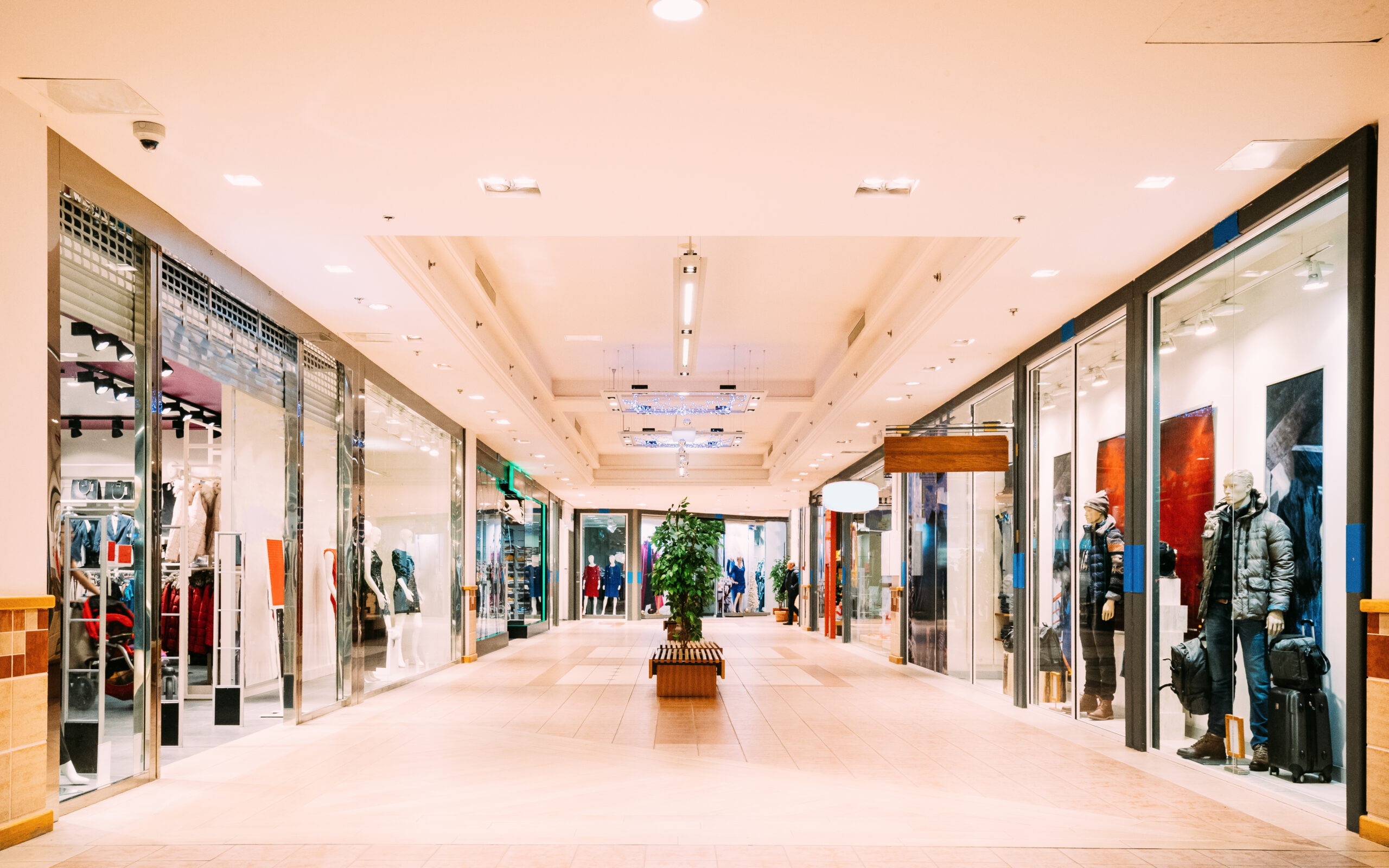
Accessibility problems in retail parks are not accidental; they are a byproduct of the original commercial logic behind retail park design, and increasingly, they are becoming a major drag on footfall, dwell time, and long-term profitability,
Large retail parks were originally designed around a simple commercial model: high-volume visits on low-cost suburban land, accessed primarily by car. Since their introduction to the UK market in the 1980s, they have operated under the assumption that customers would be willing to drive to large-format destination sites, spend extended periods browsing warehouse-style stores, make large bulk purchases, and leave.
But as the well-documented decline of retail in the UK has highlighted, the dominant model no longer reflects the needs of the modern customer, and its park owners who are paying the price for it. The consequences are increasingly visible in declining footfall, reduced dwell time, and weaker destination loyalty.
While changing consumer habits, e-commerce, and economic pressure have all reshaped retail, they do not fully explain why some physical retail destinations continue to outperform others. Increasingly, one of the defining factors separating resilient retail destinations from struggling ones is usability, and accessibility may be one of the last major untapped growth levers available to retail parks.
The £276 Billion Customer Base Retail Parks Still Underserved
Accessible environments are often perceived as a convenient extra, a ‘nice-to-have’ addition that serve a niche for little return on investment. This couldn’t be further from the commercially reality, particularly for large-scale spaces like retail parks, where accessibility is not only a lifeline, but a commercial driver.
The Purple Pound represents the household spending power of disabled people. It has increased year on year, and is currently worth £276 billion. The significance is not simply that disabled consumers wield substantial spending power, they always have, but that their spending behaviour is disproportionately influenced by accessibility, convenience, and environmental usability.
It’s in failing to cater to the market directly and rise to meet access requirements where retail parks are losing potential revenue to e-commerce, because the retail park as we know it was designed for cars, not people. And that’s a problem, because retail parks live or die on friction.
Accommodating the needs of the Purple Pound market would not only reduce friction, but positively influence retail’s primary commercial drivers. The business model has always depended on convenience, repeat visitation, long dwell times, multi-store journeys, family visits, and cross-shopping behaviour, which are key hallmarks of accessible design.
If customers are fighting to access the environment, no on-site tenant mixture is going to positively influence the bottom line of the park (or the stores themselves) to the same extent.
If anything, a retail park that hasn’t considered accessibility is a potential reputational hazard for both the site and the resident businesses.
The Design Flaws Costing Retail Parks Customers
Imagine a wheelchair user arriving at a retail park only to find there are too few accessible parking bays, missing dropped kerbs, or inconsistent pathways between stores. Before they have even entered a shop, a high-value customer has already encountered barriers that make the site difficult, or impossible to navigate. Consider also a neurodivergent visitor who experiences sensory overload from crowded walkways, loud PA systems, harsh lighting, or chaotic layouts. Or an older shopper, a core demographic for many premium and luxury brands, who chooses to shop online instead because there is nowhere comfortable to sit, rest, or recover between stores after seating has been removed to maximise footfall circulation.
For many people, these are not minor inconveniences. They are reasons not to visit at all.
Accessibility failures like these don’t just exclude disabled visitors, they redirect entire groups of consumers elsewhere; older shoppers (in an increasingly ageing population), neurodivergent visitors, families, and those without easy access to private transport.
The very same features that once made Retail Parks commercially successful have quickly become liabilities;
- Vast walking distances
- Car-dependent layouts
- Poor pedestrian infrastructure
- Limited public transport integration
- Sparse seating
- Shop floors designed for display density rather than smooth circulation
Large retail spaces may have benefited from a design built around speed, convenience, and vehicle access, but most modern consumers expect far more from commercial destinations. They want environments that are comfortable, intuitive, and inclusive, regardless of age, mobility, or personal ability.
Yet many retail parks, built around outdated assumptions decades ago, were never designed to support these expectations.
Increasingly, the highest-performing retail spaces are built as mixed-use social spaces where shopping, dining, leisure, and everyday life intersect.
Direct Access has consulted on several sites that have embedded a universal design approach to architecture, and continue to generate reliable profits, such as Cheshire Oaks Designer Outlet, which demonstrates how universal design principles can contribute to lasting commercial resilience.
The Hidden Revenue Leakage
The commercial consequences of these design failures are no longer theoretical. Back in 2019, even prior to the COVID-19 pandemic permanently changing consumer habits, The Extra Costs Commission reported that the Retail market was already losing £420m every week due to poor accessibility, when providing inclusive, personal, and pleasant in-person experiences are arguably one of the only competitive strategies the industry has left in its arsenal.
More recent research from the Research Institute for Disabled Consumers (RiDC) further highlighted the growing disconnect between shoppers and retail environments, but also demonstrated that not all hope is necessarily lost. Drawing from a pool of 4000 shoppers, 98% said they regularly faced barriers ranging from narrow aisles and heavy doors to excessive noise, unclear signage, and a lack of properly trained staff. Many also explained that their typical shopping experience required careful planning, significant physical and emotional effort, and continual adjustments, often needing to depend on others to shop for them.
Some of the other significant findings of the study included;
- 66% of respondents explaining that they had to shop differently due to the inaccessibility of retail stores.
- 61% of respondents sharing that they avoided shopping with brands, or within stores, where they have previously experienced barriers.
- 54% of respondents having to regularly abandon shops as well as cutting trips short due to fatigue or inaccessibility.
But most interestingly, the RiDC noted that 63% would give a previously inaccessible brand, or store, another chance “if they improved their accessibility”.
For retail parks, this is commercially significant because the entire model depends on keeping customers onsite longer. The study only further cements the idea that retailers providing accessible, intuitive, and frictionless environments are best equipped to be the most competitive.
The Most Successful Retail Parks Will Be the Most Usable
The next generation of successful retail parks will be designed around people, not vehicles.
Retail destinations increasingly compete on the value of the experience they provide rather than pure retail provision, so accessibility will naturally act as a commercial differentiator, rather than simply a compliance requirement.
Accessibility, in many ways, fulfils the original promise of the retail park: an environment where customers can arrive easily, navigate comfortably, spend confidently, and leave without friction. Retail destinations that consistently deliver experiences like this are far more likely to increase footfall, encourage repeat visitation, and build long-term loyalty ,with disabled shoppers recommending the park not only to friends and family, but to wider community networks as well.
In the aforementioned study by RiDC, respondents explained what the top priorities for retail spaces looking for commercial growth aught to be. They included;
Staff Interaction and Assistance: The focus should be on improving staff attitudes and knowledge through mandated disability training.
Physical environment and Infrastructure: Improving the physical accessibility of retail stores.
Policy and Governance: Stronger enforcement of disability policies, reflecting the need for accessibility audits and Equality Act 2010 compliance.
Some Retail parks have already proven the value of providing spaces that deliver on these three friction points. Examples like WestQuay Shopping Centre, demonstrate how accessibility investment became central to destination branding and customer satisfaction. That site currently attracts 120 million visitors. No collection of individual brands is likely to inspire that level of engagement, it’s the quality of the overall visitor experience delivering those results.
What a Direct Access Audit can Deliver For Your Retail Park
Through our own lived experience, specialist accessibility expertise, and practical consultancy, Direct Access is able to help retail parks identify the friction points that quietly undermine their goals, with new-build Design Consultancy services, specialised Public Realm and Retail Consultancy services for existing parks and shopping centres, Policy Review services, and comprehensive Staff Training programs suited to all levels of authority.
From pedestrian infrastructure and wayfinding to sensory accessibility, seating, staff experience, and end-to-end customer journeys, we approach accessibility as a usability challenge rather than a box-ticking exercise.
Get in touch to discuss how Direct Access can help futureproof your retail environment.