
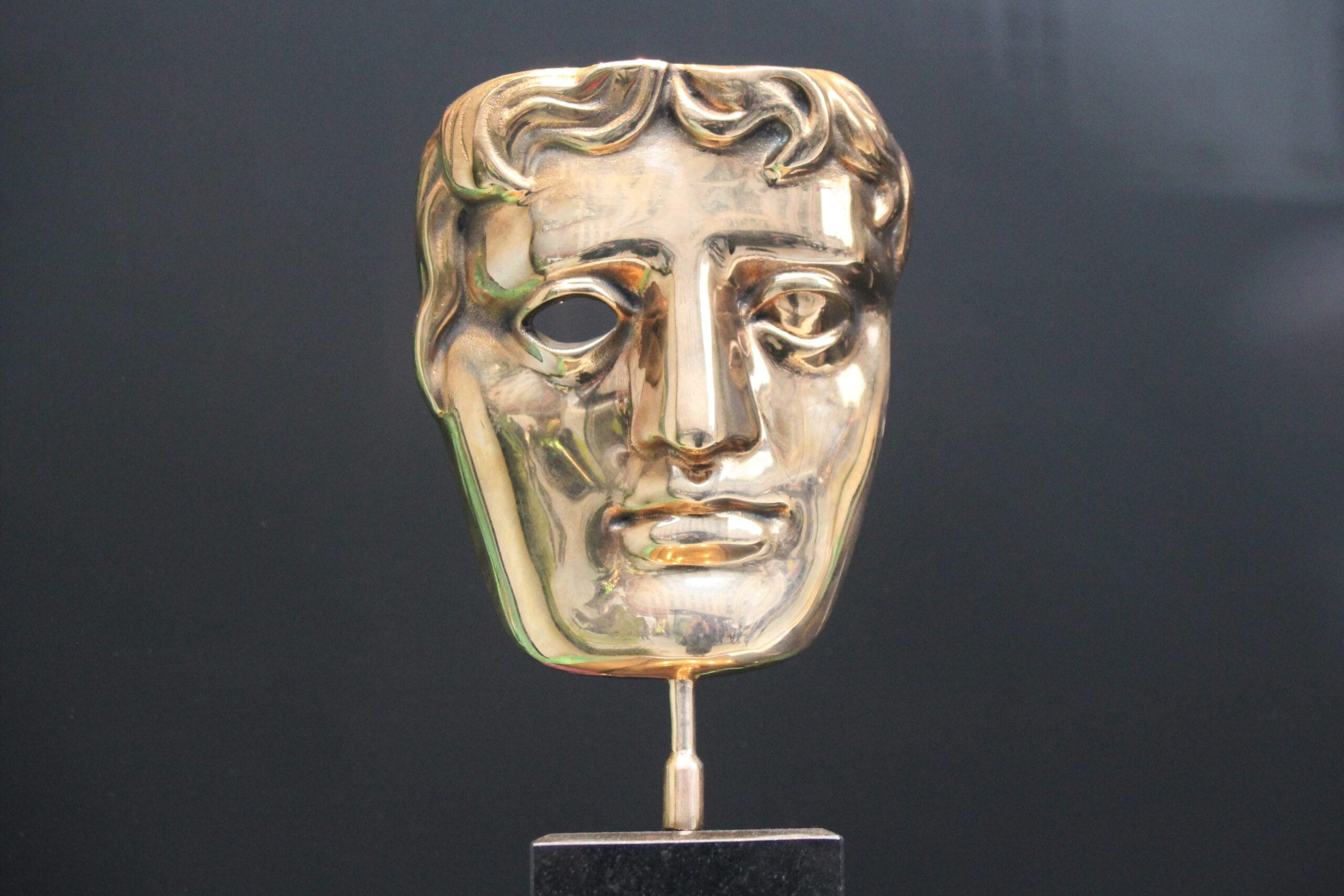
Ordinarily, an accessibility consultancy would not comment on the latest hot-button controversies in the world of show business. But the events at the 2026 British Academy Film Awards raise questions that sit squarely within our professional remit.
Direct Access works with organisations to translate disability inclusion from policy into operational practice. Inclusion is not achieved through statements of intent. It is achieved through preparation, communication, and systems that anticipate complexity. This year’s BAFTA ceremony exposed what happens when inclusion runs only policy-deep… when it is declared but not operationalised.
What Happened
Tourette syndrome activist John Davidson, whose life inspired the nominated film I Swear, was in attendance at the BAFTA ceremony. During the ceremony he experienced multiple vocal tics, including the utterance of the N-word while black actors Michael. B. Jordan and Delroy Lindo were presenting an award. The BBC, which aired the ceremony on delay, and BAFTA subsequently apologised.
We now know that Davidson had been told “any swearing would be edited out of the broadcast” and the studio behind I Swear had understood the same. At the same time, Jordan and Lindo have confirmed that they had not been briefed in advance about the specific nature of Davidson’s tics.
A general announcement was made to guests in the room, that an attendee with Tourette’s might experience vocal outbursts. That distinction matters. A general warning is not the same as information prepared.
Where it Broke Down
Tourette syndrome can include coprolalia (involuntary utterances of socially inappropriate or taboo language). John Davidson has publicly spoken about experiencing coprolalia as part of his Tourette’s. These tics are neurological. They are not expressions of belief, intent, or personal values.
Davidson himself described them as an “involuntary neurological misfire”, which makes very clear that the words do not reflect what he thinks or feels. If coprolalia were understood as readily as physical access needs, this moment would not automatically have escalated into controversy.
At the same time, the historical and contemporary weight attached to racial slurs cannot be separated from the moment in which they are heard. For Black presenters standing on a global stage, such language carries deep and ongoing trauma, regardless of intent.
These truths are not in competition. The failure here was not Davidson’s condition. Nor was it racial sensitivity. The failure was operational.
What Operational Inclusion Requires
It is important to acknowledge that BAFTA did not ignore the issue entirely. According to Davidson, he was told in advance that any swearing would be edited out of the broadcast. That indicates there was at least some pre-event conversation about how his Tourette’s may present. But inclusion seems to have stopped at a private assurance. Awareness was present, but awareness is not the same as operational design.
Scenario planning is not optional. Both BAFTA and BBC knew four things in advance:
- A key guest has Tourette’s with vocal tics
- Specific offensive language may occur
- The ceremony is broadcast globally
- The broadcast is on delay
Inclusion that works is systemic. It touches every stage of the process. So with that prior information, how should policy be translated into practice?
Proactive and proportionate communication
Where appropriate, attendees and presenters could have been discreetly informed that a guest’s Tourette’s includes coprolalia, so they were not caught off guard. Preparation does not require spectacle. It requires sensitivity.
Environmental and seating planning
Large-scale live events are high-stimulation environments: bright lights, noise, crowd movement, unpredictability. For someone with Tourette’s and coprolalia, that context can increase stress and exacerbate tics. Seating placement, traffic flow around his position, and proximity to microphones could have been considered in consultation with Davidson, with the aim of reducing unnecessary stimulus and supporting him to remain comfortable throughout the evening.
Pre-event walk-through and trigger mapping
Davidson could have been walked through the venue or event maps in advance to identify potential triggers, discuss stress points, and explore methods of engagement that might help him focus and reduce the likelihood of intense tic episodes. Inclusion is not about containment. It is about support. Davidson could have been supported through the venue in advance to identify potential triggers and discuss stress points. Inclusion involves asking: What would help you remain comfortable and confident in this environment?
Ultimately, he left the ceremony early, and that was before the social media backlash intensified. That detail alone should give organisations pause.
Broadcast contextualisation built into the run-of-show
If producers knew specific language could be involuntarily uttered, a clear line of editorial protocol should have been established in advance:
– A prepared on-screen caption or presenter statement explaining that a guest has Tourette’s with coprolalia
– A pre-agreed decision about whether such moments would be edited or contextualised live
– A named individual responsible for triggering that response during broadcast
Context is not a principle. It is a production decision.
Without predefined ownership of that decision, the burden shifts to real-time reaction. That is not inclusion. That is improvisation.
Editorial certainty, not assumption
If swearing was expected to be removed, that safeguard needed to be technically secure and confirmed. Assumptions are not systems.
Shared context, not surprise
If the decision was to air the moment, real-time contextualisation should have been prepared in advance. Not as damage control, but as part of the broadcast plan.
None of these actions sensationalise Davidson’s condition. They respect it.
Broadcasters routinely contextualise sensitive historical material. Editorial framing is not censorship. It is a responsibility. Inclusion is not about shielding organisations from discomfort. It is about ensuring that disabled people are not left exposed by incomplete systems.
Reaction Is Not Inclusion
The aftermath placed BAFTA and the BBC in an impossible position of their own making.
Editing the slur after the fact risks accusations of erasure or ableism.
Airing it without preparation risks racial harm and public outrage.
This is precisely why inclusion cannot be reactive.
When inclusion remains policy-deep, institutions are forced into damage control. When it is operationally embedded, difficult scenarios are anticipated, rehearsed, and responsibly managed.
The Broader Lesson
The presence of a disabled person at a major cultural event is not inclusion in itself.
Inclusion is the infrastructure that supports them before, during, and after the moment.
Davidson has expressed profound distress and apologised directly to those affected. That human reality should not be lost in the polarised commentary, nor should this incident be reduced to a crude debate about whether someone “meant” what they said. Tourette’s with coprolalia does not work that way. Davidson has expressed profound distress and apologised directly to those affected. That human reality should not be lost in polarised commentary.
Nor should this become a false binary between disability, advocacy and racial justice. This was a collision of two realities that both deserve to be treated seriously: the neurological involuntariness of coprolalia, and the historical and contemporary trauma carried by certain words when heard by Black people in public space. The error is not that these realities exist in the same room. The error is that the room was not prepared for them to coexist.
This should be understood as a case study in operational readiness.
In moving forward, the lesson is not about silencing people with Tourette’s or treating neurological difference as something that must be hidden to preserve “polite society”. It is about contextualising disability with empathy and clarity, before harm and misunderstanding take hold. Disability inclusion cannot be conditional on comfort. Racial sensitivity cannot be treated as negotiable. Both must coexist, even when that coexistence is uncomfortable.
It is not idealistic to expect broadcasters to recognise that conflicting needs can share space, and that acknowledging the needs of one protected group should not mean minimising the needs of another. That is precisely what inclusion is supposed to mean: not the avoidance of complexity, but the capacity to hold it responsibly.
If we are serious about building a society that understands neurological conditions as readily as it understands physical access needs, then incidents like this must prompt education rather than erasure. John Davidson’s presence at the BAFTAs was not a problem. Our collective lack of preparedness and our failure to translate inclusion into real systems was.
True inclusion means resisting the urge to hide what unsettles us and instead committing to the harder work of explaining it. Even (where possible), seeing the humour in the absurdity of it. Humour can coexist with seriousness when the person at the centre is not being reduced or dehumanised.
True inclusion requires anticipating discomfort. It requires planning for complexity. It requires recognising that the needs of different protected groups may intersect, and sometimes collide, in ways that demand thoughtful, pre-emptive systems.
Policy statements are easy.
Operational inclusion is harder.
But when it is properly embedded, it protects people, strengthens institutions, and makes cultural spaces braver, not smaller.
Consider how with properly embedded operational inclusion, both the BBC and BAFTA could have strengthened, (not damaged) their reputations as British broadcasting institutions.
With properly integrated inclusion, they could have expected not just to have a happier viewership, but a broader one. They would surely reach new demographics that the film I Swear was able to attract by nature of its subject, and the BAFTA ceremony itself would see a rise in further minority and disabled filmmakers/creatives who feel comfortable attending.
Given that the film industry’s major studios operate on inclusive policies themselves, more opportunities have been provided to filmmakers that identify as disabled, and BAFTA would be in a strategic position to accommodate their accessibility needs.
However, if BAFTA wishes to award disabled filmmakers for their efforts and revitalise their prestigious image, they have a lot of work to do. As the British equivalent to the Oscars, they are more than capable, despite this PR disaster.