
In today’s fast paced, increasingly disorienting world, businesses are recognising that the social responsibility to make environments accessible is no longer viewed as a favour to disabled people or a tick box exercise to appease legal bodies, but a strategic advantage in the world of business.
The facts speak for themselves. Consider for instance, how disabled people have an estimated £274 billion annual spending power in the UK (and over $13 trillion globally), and that expectations have been shaped by pioneering guides and standard like “Design for the mind – Neurodiversity and the built environment (released late 2022)”. Gone are the days where a wheelchair ramp equals accessibility in the mind of the public, people are rightfully demanding more.
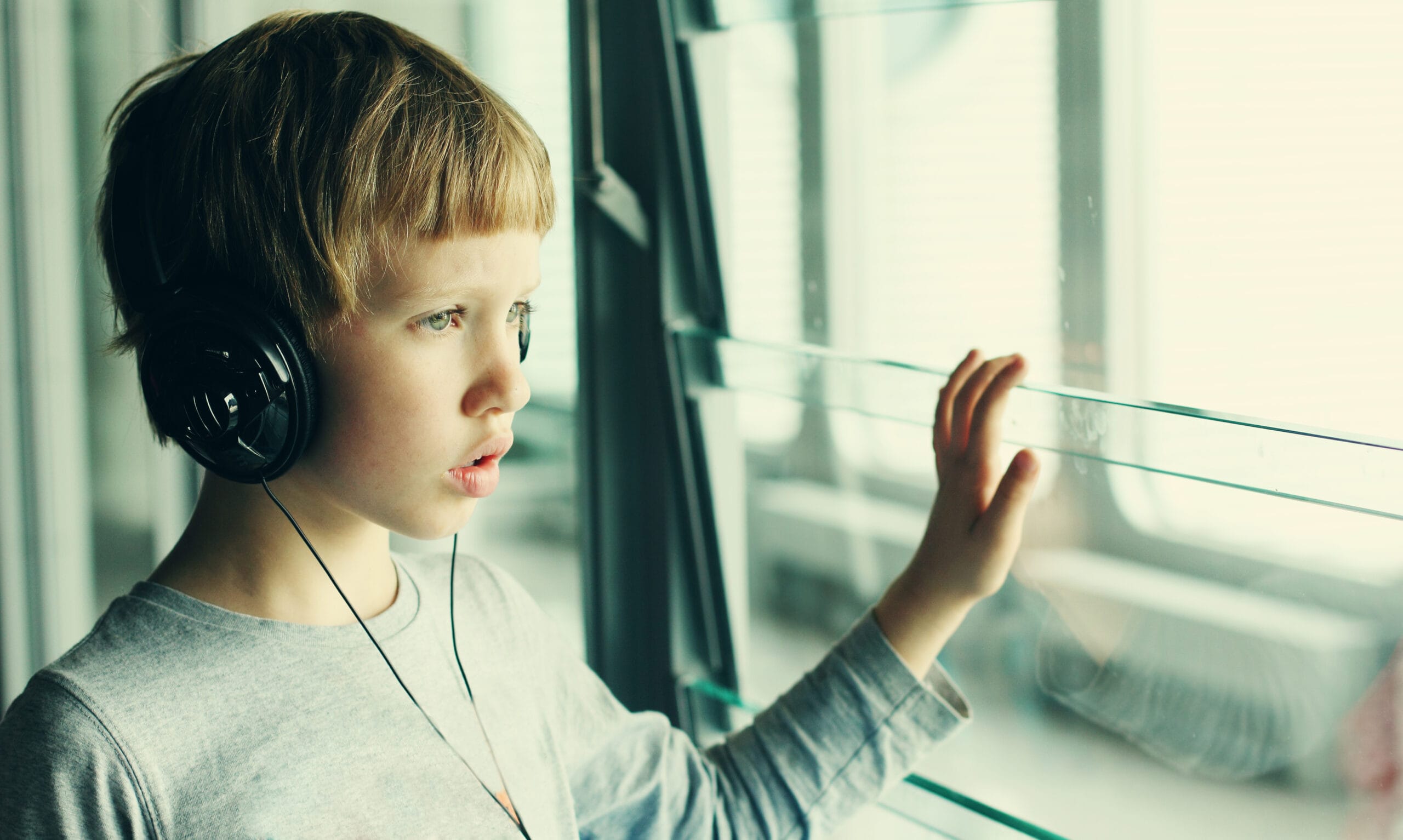
One area gaining global attention is autism awareness, and April’s designation as World Autism Awareness Month provides the perfect moment for companies to consider how they can support neurodiversity and tap into their spending power.
The movement began in 2007, when the United Nations declared April 2nd as World Autism Awareness Day, spearheaded of all places, by the State of Qatar. The goal was simple yet profound: raise global awareness, promote early diagnosis, and advocate for the rights of individuals with autism, who by nature of being cognitively divergent, have been historically and broadly stereotyped in our culture. Over time, the initiative expanded into a month-long observance, giving organisations worldwide a platform to educate, engage, and empower communities.
April was chosen not only to align with the UN’s official day but also symbolically, representing growth, renewal, and opportunity, values that resonate strongly with forward thinking businesses. Equally, creating environments that are welcoming to individuals with autism is not just the right thing to do, it’s also smart business. In this blog, we will explain just why that’s the case, with some tips on what you can do to lead the way.
Overall, Autism affects roughly 1 in 36 people globally (including the writer of this blog). These individuals, along with our families, represent a significant consumer base. Businesses that offer autism-friendly spaces, whether through sensory-friendly design, staff training, or accessible services, can differentiate themselves in a competitive market by making spaces where we feel comfortable. This can be achieved in numerous ways, some adjustments are complex, but all of them are simple and cost-effective.
For instance, facility owners who operate busy, frequently crowded environments can offer quiet or sensory rooms, which act as a space wherein autistic people can decompress and escape from overstimulation. These spaces can be more on the expensive side of things depending on your existing infrastructure, but are greatly not only by autistic people, but by anyone who is under stress and in need of escape from busy crowds. It’s why they are offered at corporate events, schools, museums, train stations (like Crewe station, which Direct Access advised on), and hotels. Offering these spaces signals an understanding of autistic groups and their specific needs. In the same way that people with physical abilities need more time to prepare for their journeys due to inaccessibility within the built environment, sensory rooms offer autistic people a cognitive break and create reassurance.
Creating accessible spaces which are autism-friendly not only benefit visitors, but also employees, encouraging retention in both cases. Consider the strengths of autistic people’ as employees, we bring unique skills, creativity, and problem-solving abilities. Creating an inclusive workplace ensures they can thrive, leading to higher retention rates, increased innovation, and a stronger bottom line.
However, business owners do not need to start big, smaller adaptations can be just as meaningful and impactful as the more extravagant features. For instance, embedding a simple policy of training all staff on autism awareness and sensitivity can act as a baseline for everything else. Of course, eery individual is different, but if staff can operate from a base understanding of how autistic people prefer to communicate, autistic people will remember that experience and are most likely to come back. After all, people always remember how going somewhere made them feel before they remember what it looked like.
In keeping with this idea that adapting spaces for autistic people benefit other groups of people, offering clear signage and sensory-friendly features are the next step. Many environments feature bright lighting, unclear signage, or confusing layouts. A way to improve these features can come about by hiring an access auditor to advise on lighting, wayfinding and development of strategies which help autistic people feel more comfortable.
An underrated accessible element I believe, is the social story. This is usually a short, simple, personalised narrative used to help someone understand a social situation and learn what to expect and how to respond. They describe what a specific scenario will be like, which could include anything from going to the dentist, starting school, checking into a hotel, or visiting a museum. They usually include details about what the environment will be like, who they can expect to encounter, and explain how to operate within those environments. The goal is not to control behaviour, but to build understanding, reduce anxiety, and support positive social skills. In this sense, they benefit not only autistic people, but other cognitive disabilities such as those with learning impairments, since social stories are written in Plain English with uncomplicated, minimal complicated language.
A social story doesn’t have to be only a written story, it can also be created as a video social story, which is especially helpful for people who learn best visually. They show the real environment and experiences someone will have, instead of just describing them, making the situation more concrete, predictable, and easier to understand. As an autistic member of the Direct Access team, I am usually responsible for the creation of client social stories, speaking from my own lived experience to pinpoint possible pressure points for autistic people to reduce anxiety and promote understanding of complex environments and highlight what to expect when interacting with their staff.
Some businesses are making active efforts to understand and improve sensory accessibility, especially those with strong inclusion policies or that have sought certification and training. However, widespread, formal sensory barrier assessments explicitly for autism inclusivity are still uncommon in most commercial environments. And we would like to take this opportunity to suggest you consider them, not merely for the moral good, but for the commercial benefit doing the right thing can provide.
The Bottom Line is that investing in autism-friendly initiatives is a win-win: like accommodating any disability, it promotes the social good while unlocking financial opportunities for businesses. Adapting spaces for autism expands talent potential and improves brand loyalty. So, this April, during World Autism Awareness Month, I would like to encourage all readers to lead with purpose and innovate with empathy.