
The Business Case for Accessibility in a Visually Diverse World
As organisations operate in an increasingly digital and interconnected world, the way information is presented, navigated, and understood has become a defining factor in how brands are perceived, trusted, and chosen. Accessibility, particularly for people with visual impairments, is no longer a discretionary add-on or a matter of reputational goodwill. It is a strategic investment that directly impacts reach, performance, and long-term profitability.
This Low Vision Awareness Month, it is timely that we recognise the more than 2.2 billion people globally live with some form of visual impairment. Many people with visual disabilities continue to encounter avoidable barriers when accessing information, services, and environments, both online and in physical spaces. For the organisations that Direct Access works with, removing these barriers has consistently delivered not only measurable inclusion outcomes, but clear commercial returns.
Accessibility Drives Performance
Despite the persistent misconception that accessibility is costly or complex, our experience, and our clients’ results, demonstrate the opposite. Providers of truly accessible and inclusive environments simply perform better.
For instance, consider websites that are designed to support people with low vision, blind users, and screen reader users. These tend to be inherently clearer, faster, and more intuitive. They provide benefit not only to disabled people, but to all users, leading to higher engagement, stronger conversion rates, reduced bounce rates, and improved search engine visibility.
By contrast, poor colour contrast, cluttered layouts, unreadable fonts, and inconsistent navigation do not only exclude people with visual impairments, but they also undermine the professionalism, credibility, and usability of a brand’s digital presence for everyone. In competitive markets, this directly impacts customer trust and revenue.
Inclusive digital design is therefore not simply about compliance; it is a growth strategy. One that rewards our clients with broader reach, stronger loyalty, and reduced exposure to legal and regulatory risk.
Inclusive Physical Media, Measurable Returns
The same commercial logic applies to physical media and environments.
Organisations that provide information through signage, printed materials, or wayfinding systems have a clear opportunity to improve performance by ensuring these formats are accessible to people with visual impairments. Braille, large print, Easy Read, and visually accessible signage allow individuals to access essential information independently, whether that information relates to navigation, safety, instructions, or services.
Where signage fails to meet recognised standards, such as BS 8300 guidance on contrast, font choice, glare reduction, and mounting height, organisations not only risk falling short of Equality Act 2010 expectations but miss a significant opportunity to differentiate themselves. Independence-driven design reduces reliance on staff assistance and supports operational efficiency.
Most importantly, however, it communicates foresight, professionalism, and a serious commitment to customer experience, qualities that directly strengthen brand value.
Tactile Maps: Designing Spaces That Perform Better
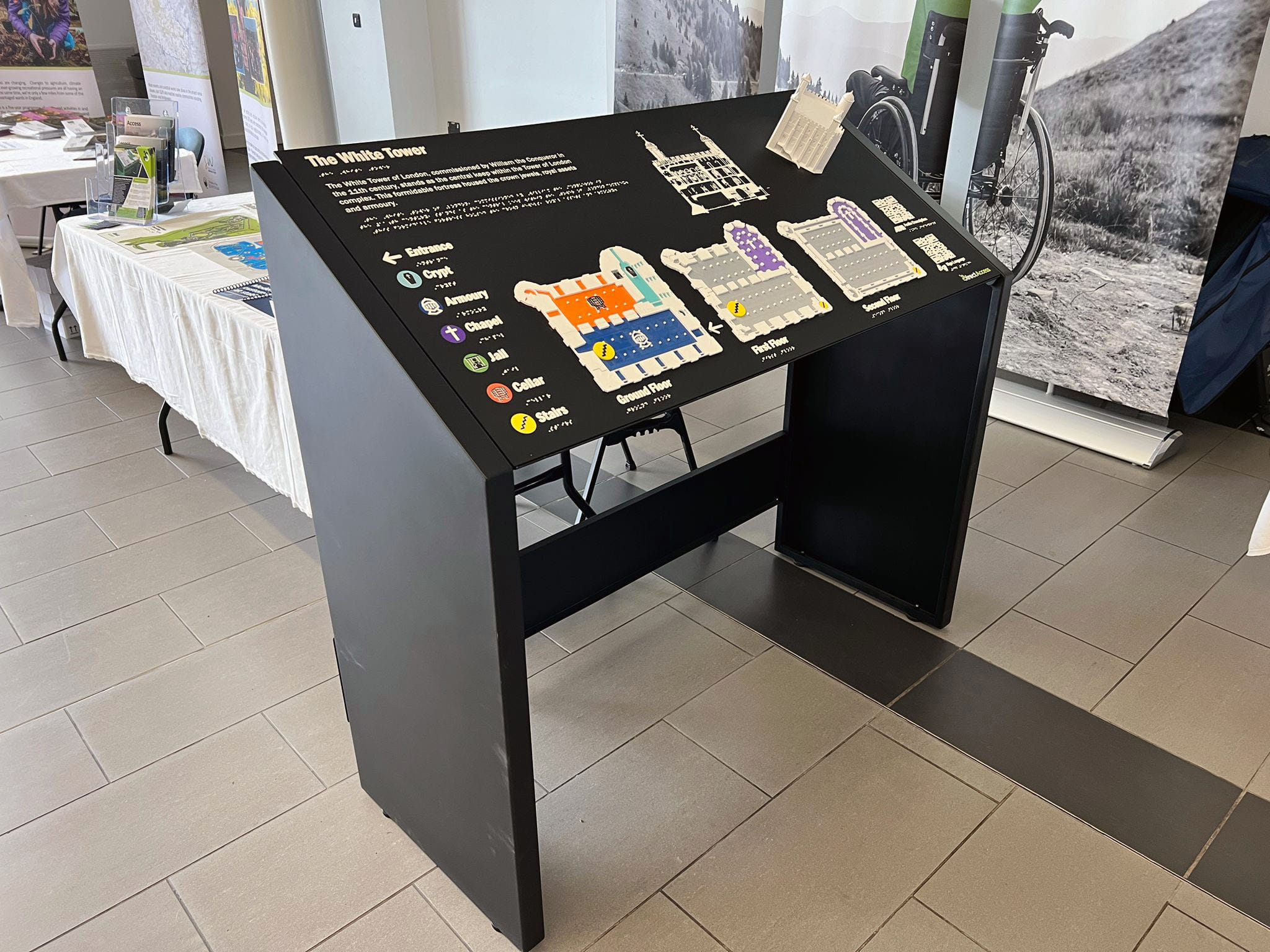
Direct Access’s signature product, the Tactile Map Board, exemplifies how accessibility delivers both social impact and financial value.
Designed by disabled experts with lived experience, these maps enable people who are blind or have low vision to understand and navigate spaces confidently and independently, from museums and campuses to transport hubs and public venues.
Some inclusive design elements our Maps provide include high contrast colour palettes, Unified English Braille (UEB), tactile elements, and universally recognised symbols within the key, thus dramatically reducing confusion and inaccessibility compared to traditional wayfinding solutions. For organisations, these design choices translate into fewer enquiries relating to navigation, more efficient use of staff time, improved safety outcomes, and increased return visits from blind and partially sighted users.
QR Codes: Scalable, Future-Proof Accessibility
To further enhance value, Direct Access integrates QR codes into tactile map systems, linking users to bespoke audio descriptions accessed via their own devices. These provide instant explanations of layouts, routes, and key points of interest, increasing autonomy for users while reducing dependence on in-person assistance.
From a business perspective, this creates a future-proof solution. Digital content can be updated without replacing physical infrastructure, significantly reducing refurbishment costs and allowing information to remain accurate in dynamic environments such as hospitals, transport networks, exhibitions, and public buildings.
The result is accessibility that adapts, scales, and continues to deliver value over time.
Accessibility That Strengthens Brand and Sustainability
Prioritising accessibility enables organisations to unlock new markets, strengthen brand credibility, and future-proof services in an environment where stakeholders increasingly expect leadership, not minimal compliance.
At Direct Access, accessible media is developed with a dual focus: delivering measurable benefits for organisations while centering dignity, equality, and usability for end users. This balance is what ensures accessibility solutions are not only ethical, but commercially effective and built to last.
This Low Vision Awareness Month, we would encourage our readers to view accessibility should be recognised for what it truly is: a catalyst for innovation, efficiency, and sustainable growth. Organisations that invest in accessible media are not only meeting moral responsibilities but positioning themselves for long-term commercial success in a world that values inclusion as much as financial returns.