info@directaccess.group

E-Mail

UK: +44 1270 626222

Ireland: +353 (0)15079081

Accessibility

Guidance

A Caucasian male child standing indoors near a large window, wearing over‑ear headphones. They are dressed in a long‑sleeved, light gray shirt and have one hand gently resting against the glass. Soft natural light comes through the window, creating a calm, reflective atmosphere. The scene suggests someone listening to music or audio while quietly looking outside.
accessibility guidance

The Business Case for Sensory Accessibility in built environments

In today’s fast paced, increasingly disorienting world, businesses are recognising that the social responsibility to make environments accessible is no longer viewed as a favour to disabled people or a tick box exercise to appease legal bodies, but a strategic advantage in the world of business.  The facts speak for themselves. Consider for instance,

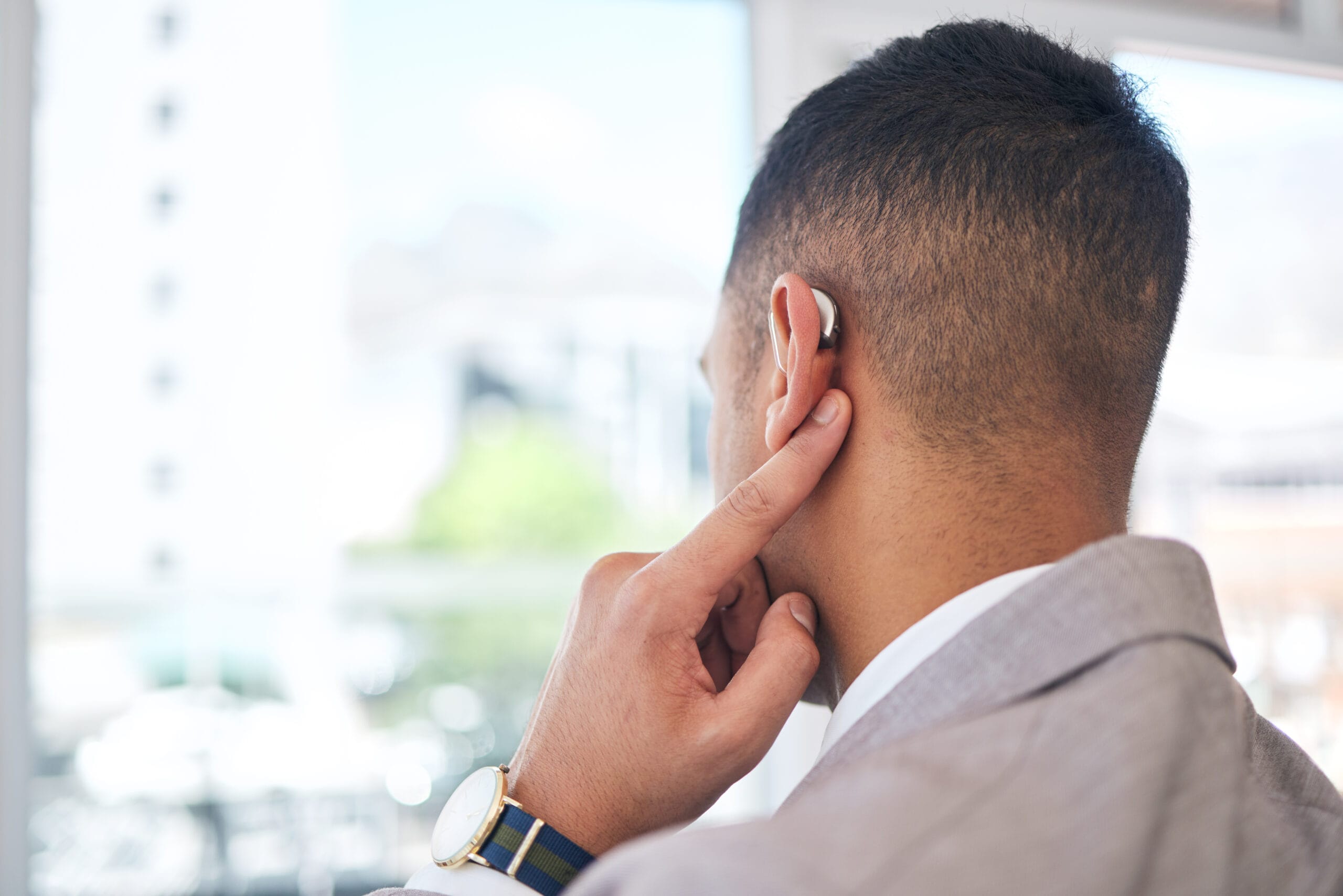
The image shows a person viewed from behind, gently touching the hearing aid positioned behind their ear. The individual is wearing a light-colored suit jacket and a watch with a blue band. Soft natural light is coming through the window in front of them, and the background appears to be an indoor space with large windows overlooking an urban setting. The composition highlights the hearing aid and the person’s gesture, suggesting adjustment, use, or awareness of the device.
accessibility guidance

Building Better Experiences Through Accessible Communication

Auditory processing impairments, including Auditory Processing Disorder (APD), affect how the brain interprets sound rather than how the ears detect it. Many individuals with these impairments have hearing that tests as “normal,” yet they encounter persistent communication challenges in everyday interactions due to a lack of accessibility measures that accommodate their needs.  For businesses, these

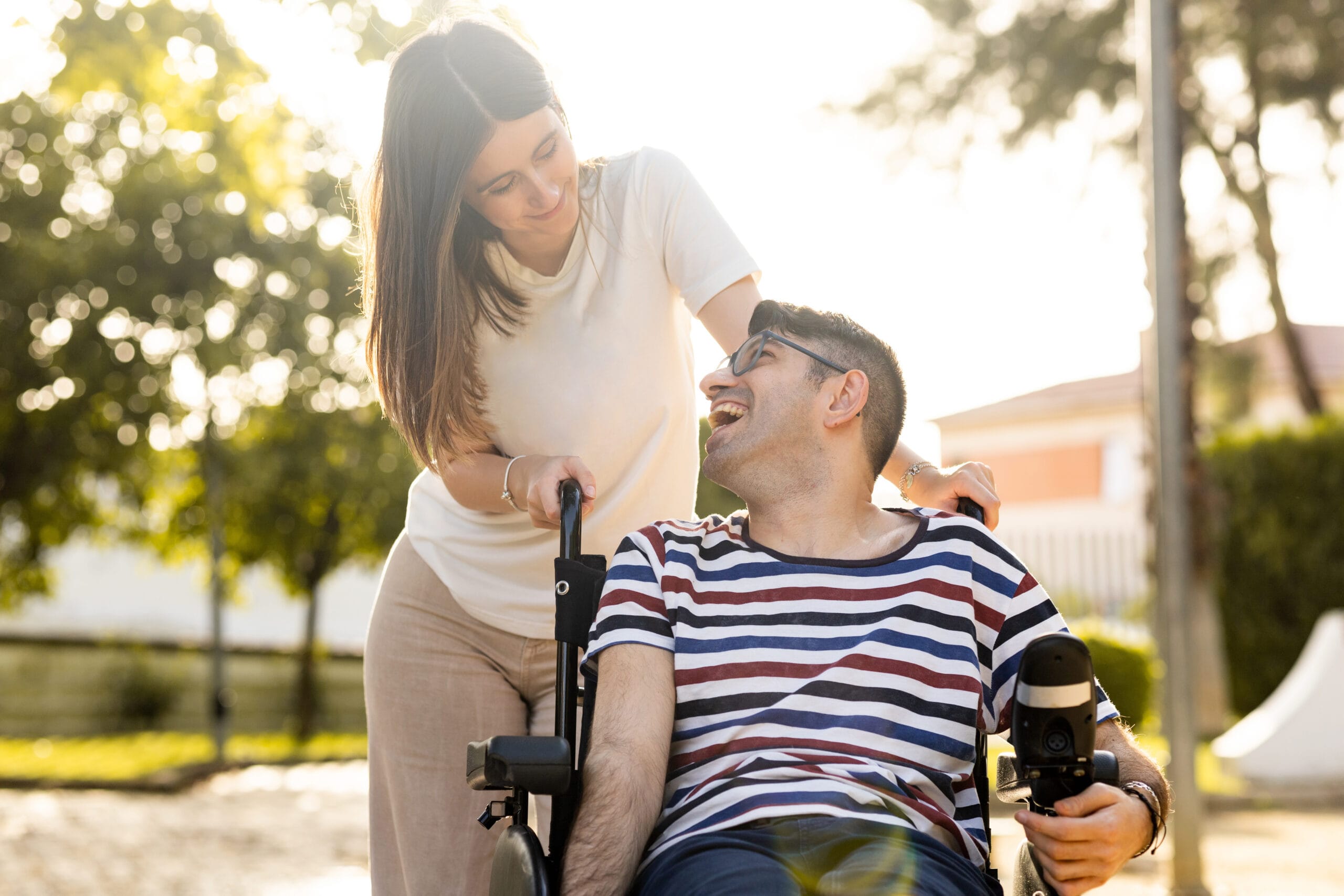
The image shows an outdoor scene with two people interacting in a sunny, park‑like setting. One person is seated in a wheelchair, wearing a striped shirt and holding what appears to be a drink or bottle in one hand. Another person stands beside them, leaning slightly forward while holding the wheelchair’s handle and resting a hand supportively on the seated person’s shoulder. Warm sunlight creates a soft, glowing atmosphere, and trees and buildings are visible in the background, giving the moment a calm and supportive feel.
accessibility guidance

Designing Inclusive Environments for People with Cerebral Palsy

To design environments that truly include people with cerebral palsy, it is important to move away from the idea that accessibility requires analysing disability on a case-by-case, “disability by disability” basis. Genuine inclusion is not about solving isolated problems for specific groups, (whether that’s cerebral palsy, neurodivergence, visual impairments etc.),

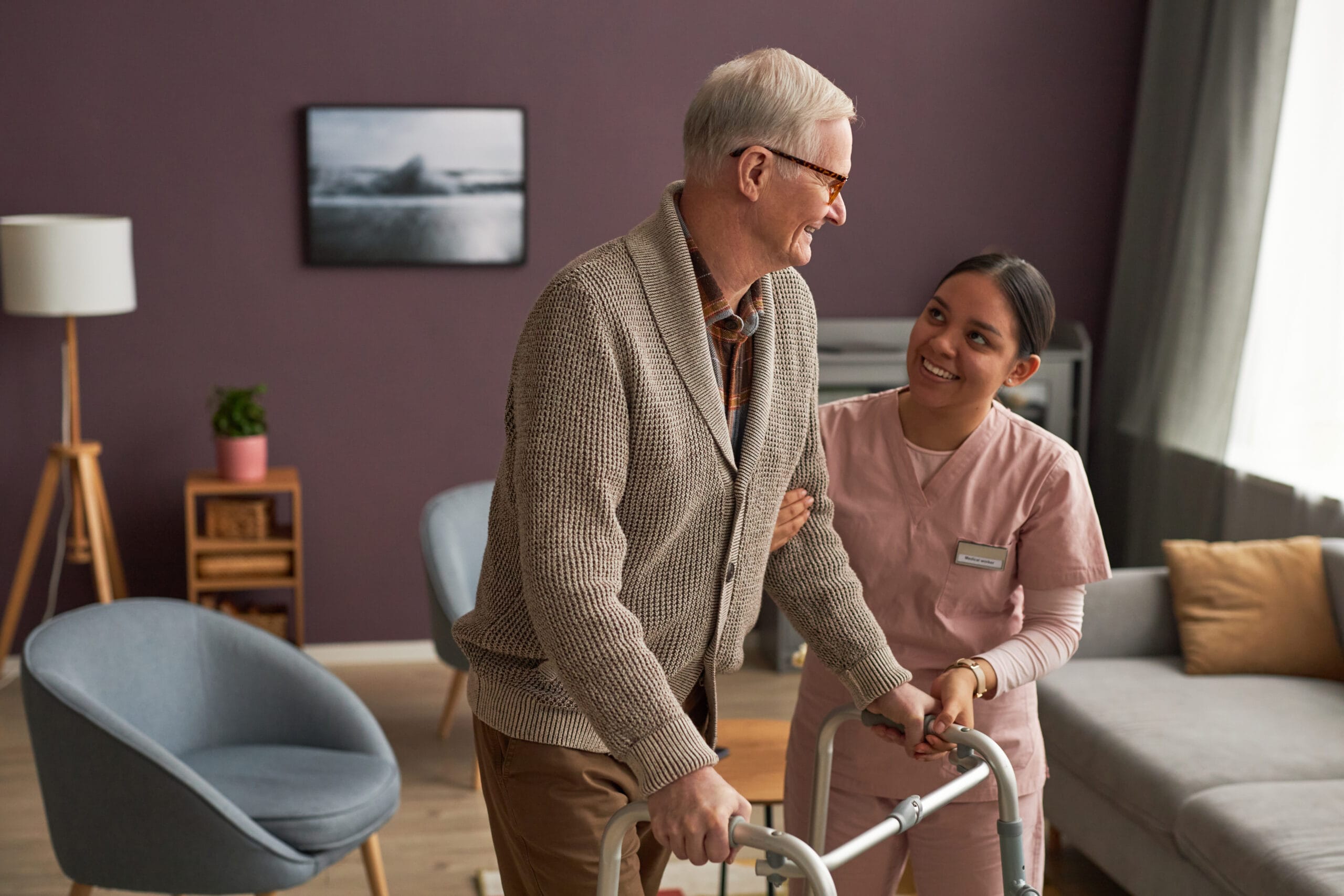
A caregiver in a pink medical uniform supports an older adult who is using a walking frame. They are standing together in a warmly lit living room featuring modern furniture, including a grey armchair, a wooden side table with a potted plant, and a sofa with yellow cushions. A floor lamp and a framed landscape photograph hang on the wall behind them, creating a calm and homelike environment as the caregiver assists the individual with mobility.
accessibility guidance

Why Designing for Dementia Future Proofs your Facility

In principle, most people agree that public spaces should be welcoming, intuitive, and accessible to all. Yet for millions of individuals, navigating everyday environments, such as hospitals, town centers, transport hubs, libraries, leisure facilities, and council buildings can be stressful at best and, in some cases, entirely unmanageable. While this

The image shows a hand holding two menu booklets inside a cozy pub or restaurant. The menus are titled “The Leopard Menu” and each features the Joule’s brewery logo at the top. One menu is labeled “Large Print” and the other is labeled “Grade 1 Braille.” Both covers display illustrations of a pie and a drink. The background reveals a warmly lit interior with wooden furniture, vintage-style décor, and hanging lights, creating a classic pub atmosphere.
accessibility guidance

Why Braille Still Matters and Why You Can’t Afford to Ignore It

The Misunderstanding of Braille’s Value When we talk to organisations about accessibility, one thing comes up again and again: braille and other accessible formats are often overlooked. We have even heard people say that braille is outdated, niche, or no longer needed because of screen readers. This is not only

The image shows Bromsgrove railway station with multiple platforms and tracks under bright, sunny weather. A modern yellow‑and‑black train is approaching the station along the center track. The platforms are marked with signs indicating platform numbers, including large overhead signs for platforms 2 and 1 in the foreground. Blue lamp posts and metal structures for overhead electric wires line the tracks. There are small sheltered waiting areas, station signage, and safety markings along the platform edges. Trees and greenery border the station, giving it a clean and open atmosphere.
accessibility guidance

Bridging the Gap for Deaf Passengers and BSL users on Railways

The Current Experience of Disabled People Much can and has been said about the flaws with British railways. As a team of accessibility consultants, Direct Access has tried our hardest to facilitate accessibility improvements with the many companies that have partnered with us, including Transport for Wales, Avanti West Coast,

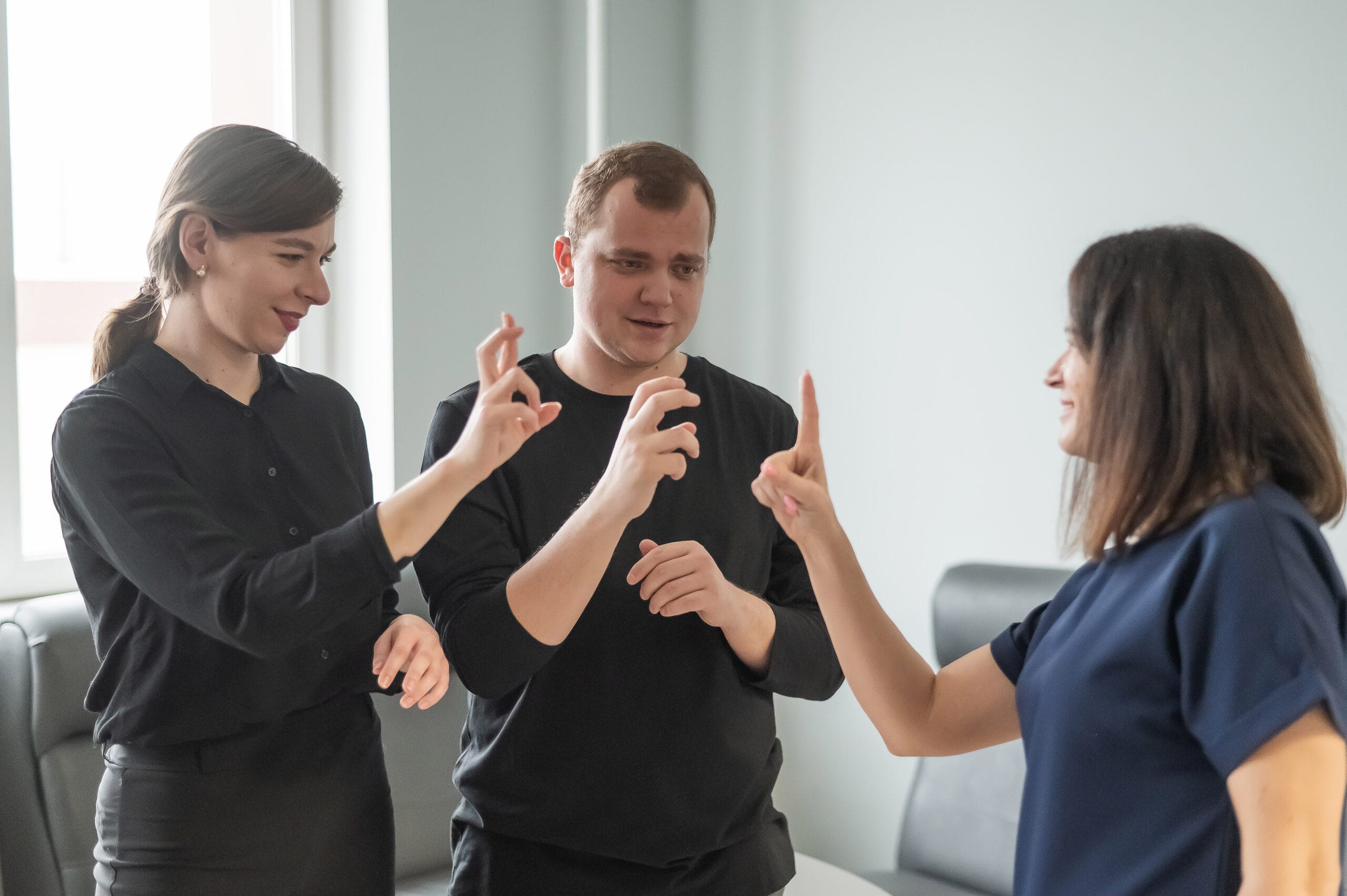
The image shows a mixed group of people standing together in a bright indoor setting, engaged in communication using sign language. All three individuals are positioned in a small circle, facing one another with their hands raised as they form various signs. They are dressed in dark, professional clothing, and their body language suggests focused, attentive interaction. The background features light-colored walls and minimal furniture, giving the scene a calm, classroom‑ or office‑like atmosphere.
accessibility guidance

The Role of Communication Support for Disabled Customers in Digital Spaces

With the widespread closure of the high street and the migration of businesses, shops, and retailers more broadly to online spaces, the consequential effects of society’s ever-expanding pivot to digital commerce and the reduction of traditionally physical spaces for business have been discussed at great length on our blog, particularly

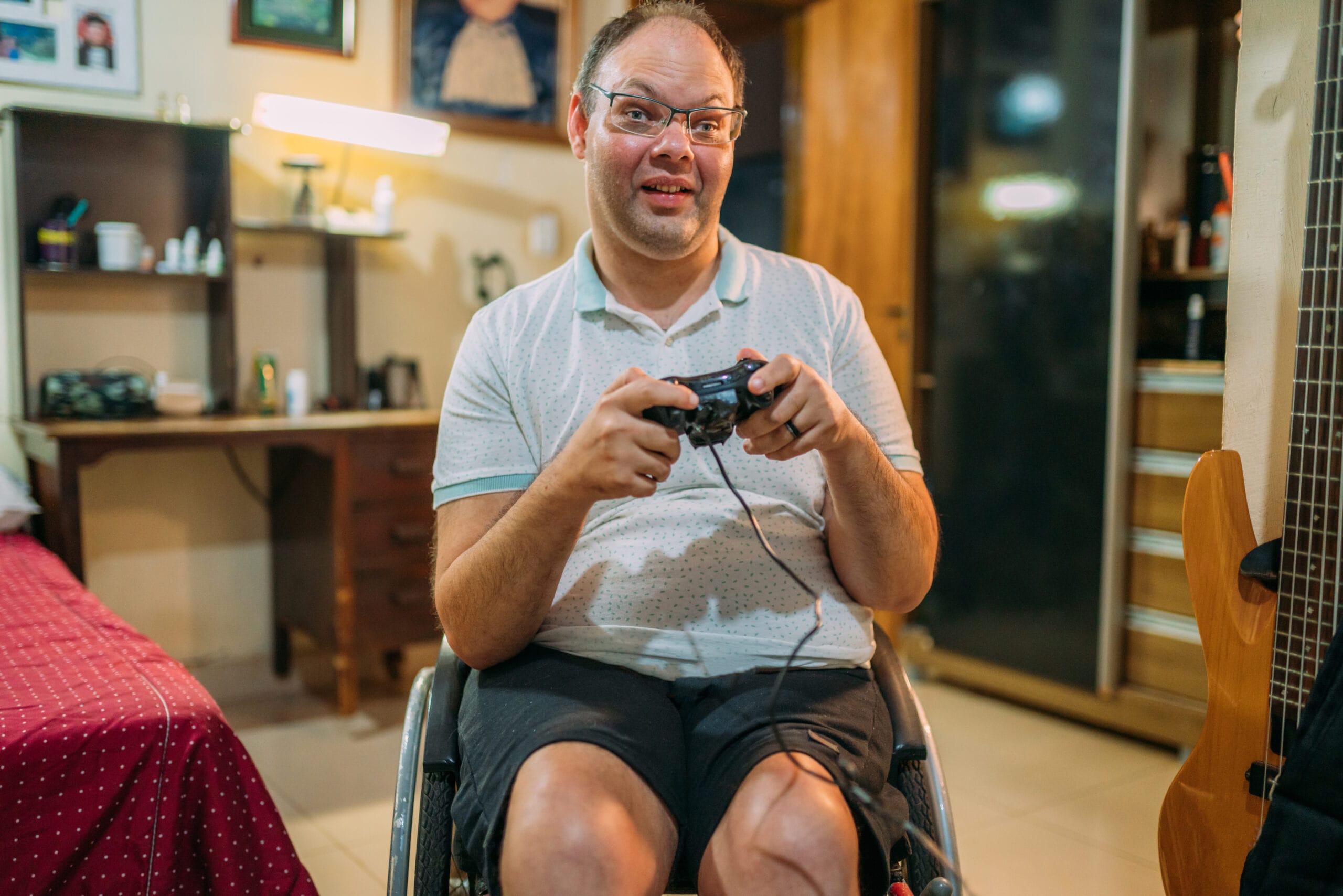
The image shows a caucasian man sitting in a wheelchair inside a cozy, lived‑in room while holding a video game controller. The individual is wearing a light-colored polo shirt and dark shorts, focused on playing a game. Around them, the room features a desk with a lamp, shelves with various items, framed pictures on the wall, and a guitar leaning against furniture. The warm lighting and casual setup create a relaxed, homey atmosphere.
accessibility guidance

Still Not Playing Fair: Accessibility Gaps in Gaming and Digital Entertainment

It is now 2026, and given our world’s reliance on digital platforms for everything from banking to shopping, digital entertainment is often marketed as more inclusive than ever. Watch any advertisement for a major company such as Microsoft, Google, or Apple, and you will notice a clean, inoffensive, and inclusive

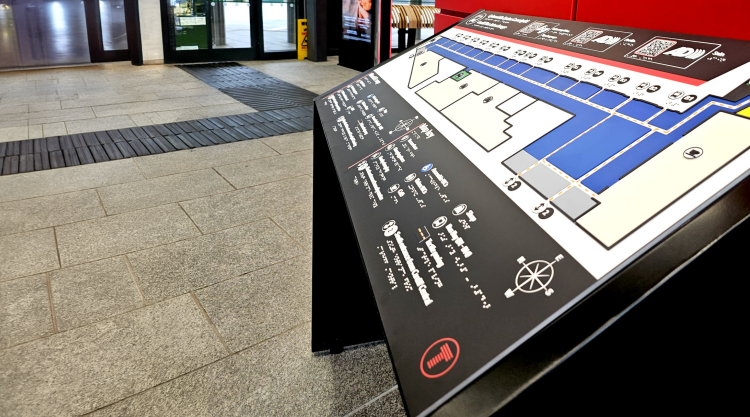
A Direct Access tactile map board at the entrance of the Cardiff Bus Interchange.
accessibility guidance

Reach More Audiences, Build More Trust: The Power of Accessible Media

As societies become increasingly digital and interconnected, the presentation and delivery of media plays an ever more crucial role in shaping public understanding of accessibility; because how disability is catered for and portrayed through media directly influences public attitudes, policy debates, and societal norms. For the 1.3 billion people with disabilities

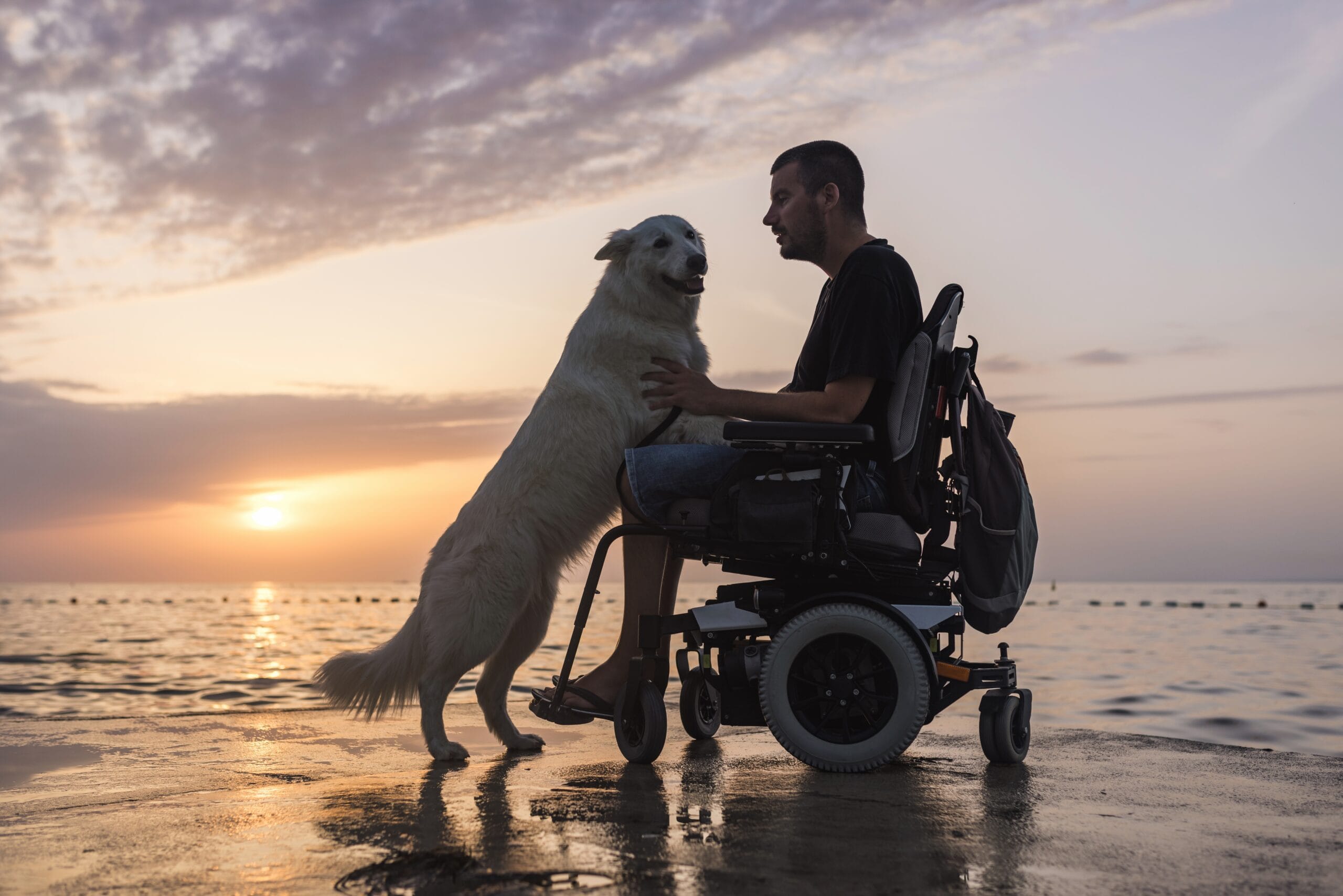
A man in a motorized wheelchair interacts with a large white dog on a waterfront at sunset. The dog stands on its hind legs with its front paws resting gently on the person's lap. The person is seated and facing the dog, creating a moment of connection and affection. Behind them, a calm body of water reflects the warm hues of the setting sun, casting a golden glow across the sky and rippling surface. The scene evokes tranquility, companionship, and inclusive outdoor enjoyment.
accessibility guidance

Terrain Tourism: Why Accessible Wheelchairs should be available on beaches as standard

Everyone should have the opportunity to experience the outdoors. Feeling the warmth of the sun, listening to the crash of ocean waves, or walking beneath a sea of trees are some of life’s simplest and most meaningful pleasures. For millions of people who live with mobility challenges, however, these experiences

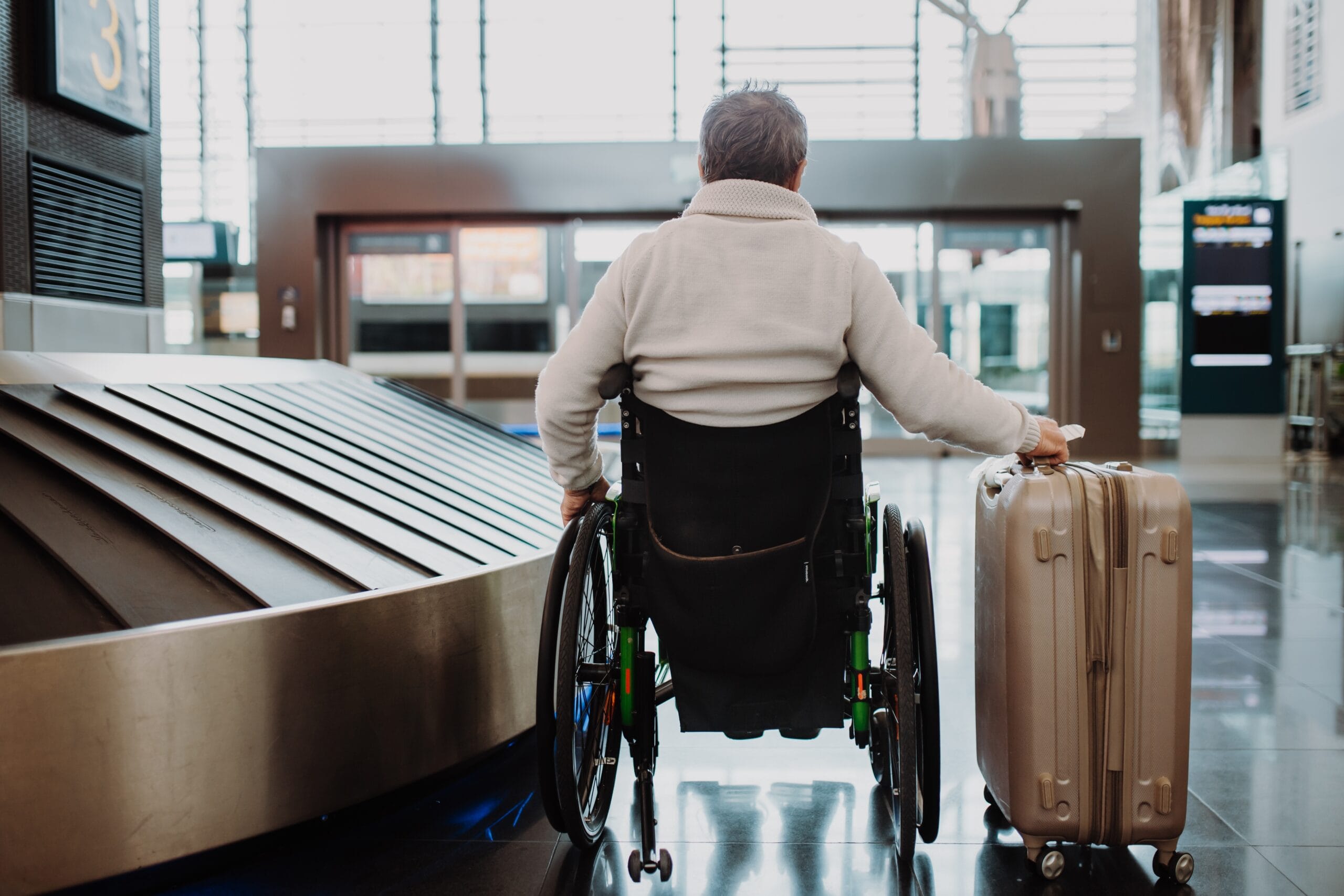
A wide shot photograph of an older white and male wheelchair user with grey hair in an airport foyer. He is sat next to a baggage conveyor belt and has his right arm stretched out, gripping his luggage.
accessibility guidance

Airports for All: How Accessibility Drives Revenue Growth

 Air travel is more than a way to get from point A to point B—it’s a gateway to opportunity, freedom, and connection. For millions of travelers with disabilities, however, airports and airlines can still pose significant barriers. From inaccessible boarding processes to limited facilities, the experience often falls short of

Side view portrait of young African-American woman using wheelchair while working from home on a laptop in a minimal grey living room interior.
accessibility guidance

Return-to-Office Mandates Are an Inclusion Crisis in Disguise

(Or How Forced RTO Policies Are Rolling Back Disability Rights—And What Companies Must Do Instead) The Broken Promise of Workplace Inclusion Remote work wasn’t a gift of the pandemic—it was a long-overdue breakthrough for inclusion. For millions of disabled, neurodivergent, and caregiving employees, it wasn’t about comfort. It was about

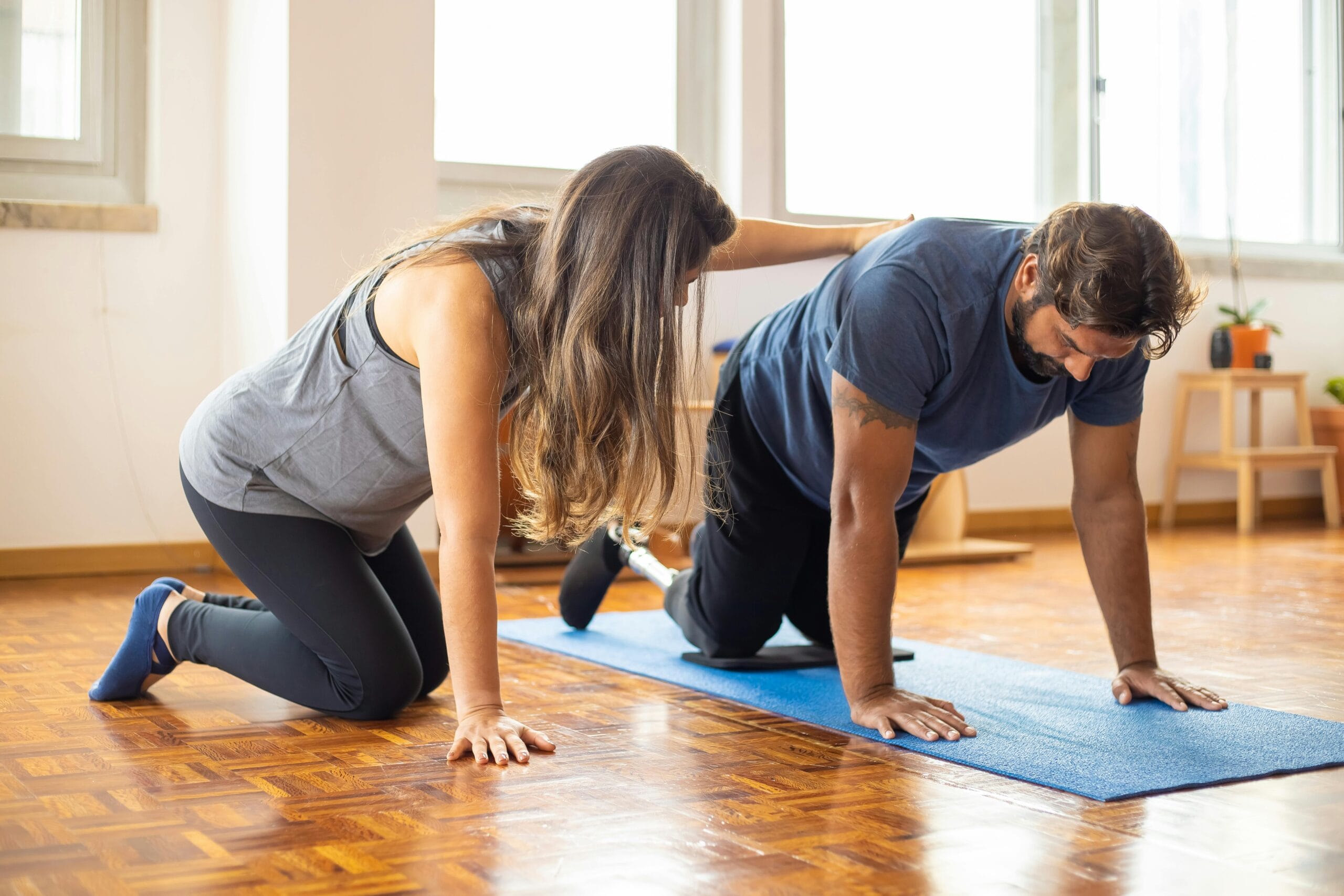
Two individuals are engaged in a physical therapy or fitness training session indoors. One person, wearing a blue shirt and black pants, is positioned on a blue exercise mat in a modified quadruped stance—hands and knees on the mat, resembling a plank variation. Beside them, a second person in a gray sleeveless top and black leggings kneels, offering guidance and support with one hand placed gently on the participant’s back and the other on the floor. The room is well-lit with natural light from large windows, featuring wooden flooring, potted plants, and home-style furnishings in the background. The scene emphasizes attentive instruction, body alignment, and supportive movement practice.
accessibility guidance

How Accessibility Unlocks Better Workouts And Better Business

The fitness industry measures everything—from average rep speed to protein shake sales. Yet most clubs fail to track their most revealing metric: the invisible exodus of members who leave not because of price or programming, but because basic design makes their workouts harder than they need to be. Consider this:

A photo of a train arriving at an underground station. The photo is shot with a low shutter speed giving it a blurred effect.
accessibility guidance

The Financial and Social Case for Accessible & Inclusive Rail Networks

As the UK rail industry charts a course toward modernisation, one critical factor remains insufficiently addressed: true accessibility and inclusion for disabled passengers. For Direct Access, we believe this is not only a question of compliance or public image— but a strategic opportunity to lead the way in delivering a

A narrow focus wide shot of a football sat stationery on a stadium football pitch. In the background the stalls of the surrounding stadium and a goal.
accessibility guidance

Inclusion in Sport and Stadium Management – Accessible Formats

In the realm of stadium facilities management, accessibility for spectators, staff, and players is an area of increasing focus that aims to ensure equitable access for all. While modern stadiums are designed to facilitate physical access, disability is diverse, encompassing a range of needs. Direct Access has demonstrated a range of

A photo of a Direct Access Evacuation Chair hung up on a wall next to a wheelchair lift.
accessibility guidance

How Access Audits inform effective Evacuation Plans for Care Homes

Throughout history, buildings have generally been constructed to accommodate the needs of people without disabilities while ignoring those who do have them. As low as building standards can and have often been, however, the idea that care homes might not be truly accessible to residents is a worrying one for

A pretty young woman wearing dark glasses and headphones in a sensory room, which is lit up purple.
accessibility guidance

The Crucial Role of Sensory Accessibility in Environmental Design

Sensory accessibility is a crucial facet which we advocate to be embedded into every element of our built environment. It ensures that all individuals, regardless of their condition, can fully participate in their environment, whether that’s at school, college, the workplace, or in leisure settings. Yet within our particular line of

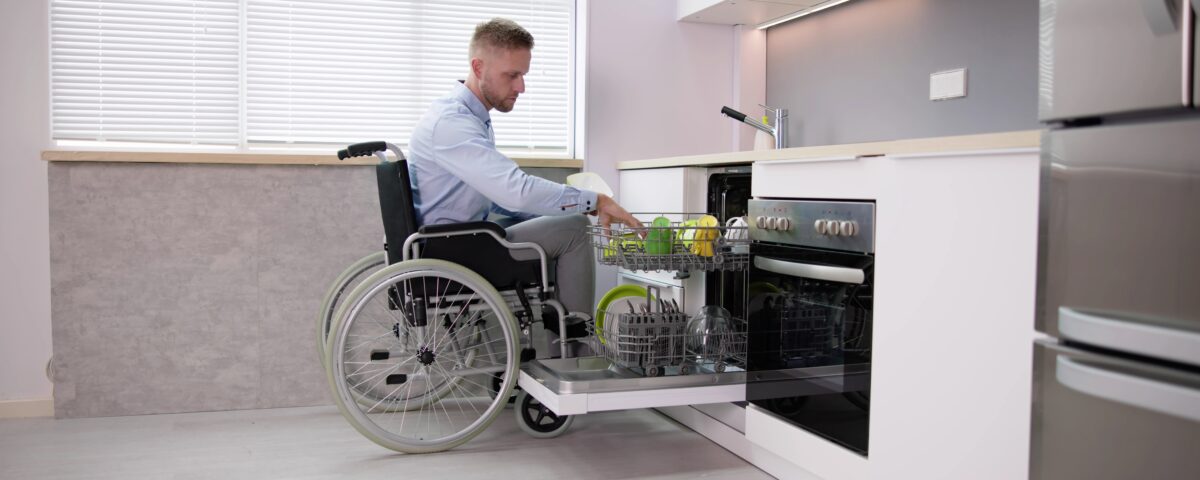
A young Caucasian man in a wheelchair takes cutlery items out of a split-height counter dishwasher in his home kitchen.
accessibility guidance

Building a Better Future: The Importance of Accessible Housing for All

Ever since the pandemic occurred half a decade ago, the way we use our homes has shifted significantly. That is to say, in addition to being our nest, the global shift in attitude towards working from home has transformed our personal sanctuaries into workplaces. For disabled people across the country, this

An office desk has two cardboard cubes (the top is red, the bottom is green) stacked on top of each other. These are to represent the question of what makes something accessible. The red one has an image of a question mark on it, while the green one features the international symbol of access.
accessibility guidance

Unlocking Inclusive Design: Mastering the Key Principles of Accessibility

Offering accessibility as a service has been a cornerstone of our work for nearly two decades. Our philosophy is straightforward: we help organisations—whether public or private—move away from exclusive design practices and become more inclusive for people with disabilities. But the real challenge lies in recognising that accessibility is not

An unhappy young Black Woman in a wheelchair looking fed up in front of a staircase with no ramp access. She is holding her head in her hand.
accessibility guidance

Why the inevitability of disability means we should demand more from built environments

As a team of disabled people, Direct Access is of the view that urban infrastructure throughout history has favored the convenience of a wholly inaccurate and idealistic idea of what a society “should be”. Put simply, most human settlements are largely discriminatory toward people with disabilities, favoring the needs of

Direct Access
Privacy Overview

This website uses cookies so that we can provide you with the best user experience possible. Cookie information is stored in your browser and performs functions such as recognising you when you return to our website and helping our team to understand which sections of the website you find most interesting and useful.